Designing industrial factories ranging from 10,000 m² to 30,000 m² is a comprehensive challenge that balances Aesthetics – Functionality – Cost. A well-developed design not only helps investors optimize production workflows from day one but also ensures flexible scalability for future expansion. If you are planning a manufacturing facility, a well-structured investment in design from the early stages will provide the strongest foundation for long-term business success. Contact us today — SVG Engineering, a trusted industrial factory design consultancy with 20 years of experience.
INDUSTRIAL FACTORY DESIGN FOR 10.000 - 30.000M² (1 ha - 3ha): OPTIMIZING PROCESSES AND MODERN STANDARDS
1. Core Characteristics of Industrial Factories with a Floor Area of 10,000–30,000 m²
At this scale, industrial facilities enter the segment of centralized manufacturing plants. Unlike small workshops of only a few hundred square meters, this type of factory has the following distinctive characteristics:
Typically integrates production areas, warehouses (for both raw materials and finished goods), administrative office spaces, and auxiliary facilities (such as substations, parking areas, and canteens).
Require extremely high electrical loads to support automated production lines and advanced manufacturing equipment.
Demand wide internal road networks capable of handling frequent access by 40-foot container trucks.
Often must comply with certifications such as ISO, LEED (green building standards), or stringent requirements set by global clients (e.g., Apple, Samsung, LG).
2. Master Planning: Optimizing Land Use Efficiency
With land areas ranging from 1 to 3 hectares, the allocation of construction ratios is a decisive factor in overall investment efficiency.
2.1. Appropriate Building Coverage Ratio
In general, the maximum permitted building density ranges from 60% to 70%. The remaining area is allocated for internal roads, landscaping, and auxiliary facilities.
2.2. Functional Zoning
A professional industrial factory design must ensure a one-way flow circulation system to avoid operational conflicts:
Located at the central zone of the site, minimally affected by external dust and noise.
Should be positioned near site entrances or loading docks to optimize loading and unloading time.
Typically designed as a 2–3 storey building at the front of the factory or as a separate block to create a professional working environment and isolate machinery noise.
Waste storage areas and wastewater treatment facilities must be located at the downwind end of the site and kept at a safe distance from office areas.
3. Structural and Architectural Solutions
3.1. Pre-Engineered Steel Buildings (PEB)
This is the most optimal solution for factories with a floor area of 10,000–30,000 m². Steel frames allow for large clear spans (up to 50–60 m without intermediate columns), creating open and flexible production spaces.
Use high-strength steel, coated with fire-resistant paint in accordance with the latest regulations.
Should integrate daylighting panels and natural ventilation systems (louvers) to reduce energy consumption.
3.2. Industrial Floor Slab Solutions
The factory floor is the “heart” of the manufacturing plant. For electronics component factories (such as Phihong or Kstar-type facilities), the floor must be a polished reinforced concrete slab or an anti-static (ESD) epoxy-coated floor.
- Typical floor load capacity:
Ranges from 2 to 5 tons/m².
A polyethylene vapor barrier layer is required to prevent ground moisture from affecting machinery and equipment.
4. MEP Systems – The Lifeblood of an Electronics Manufacturing Plant
In factories developed on sites of 1–3 hectares, MEP systems can account for 40%–60% of the total construction value.
4.1. Power Supply System
Electrical demand for such factories is typically measured in MVA. The design must include a dedicated substation and backup generator systems to ensure continuous 24/7 operations.
4.2. Cleanroom Systems
For facilities manufacturing semiconductors, printed circuit boards, or engineering plastics (such as Van Long–type factories), the design must incorporate cleanrooms compliant with Class 1,000 to Class 100,000 standards.
AHU systems, HEPA filtration, and humidity control are mandatory requirements.
4.3. Fire Protection System (Critical Importance)
In accordance with Decree No. 136 and QCVN 06:2022, fire safety appraisal and approval for factories exceeding 10,000 m² are extremely stringent. The design must include:
-
Automatic sprinkler fire suppression systems
-
Fire curtains or fire-rated partition walls between functional zones
-
Large-capacity fire water tanks, typically 500 m³ or larger
5. Trends in Green and Smart Industrial Factories
Corporations and industrial groups are placing increasing emphasis on sustainability and environmental responsibility.
- Rooftop solar power systems:
With factory roofs covering 2–3 hectares, installing solar panels not only reduces electricity costs but also helps companies achieve green certifications, supporting exports to European and U.S. markets.
- Natural ventilation solutions:
The use of roof ventilators or evaporative cooling systems (cooling pads) can maintain indoor factory temperatures 3–5°C lower than outdoor conditions while consuming minimal energy.
- Building Management System (BMS):
Enables centralized monitoring and control of electrical, water supply, and fire alarm systems through a unified control interface.
6. Legal Considerations and Project Implementation Procedures
The implementation of a 30,000 m² industrial project within key industrial parks must comply with the following procedures:
- Geotechnical investigation:
The most critical step for foundation design, ensuring ground stability and preventing settlement issues for large-scale factory buildings.
- Basic design and construction permit approval:
Requires close coordination between the investor and the Industrial Park Management Authority.
- Fire safety appraisal and approval:
Must be conducted in parallel with architectural design to avoid repeated drawing revisions.
- Environmental Impact Assessment (EIA):
Mandatory for manufacturing industries that generate industrial wastewater.
SVG ENGINEERING – A TRUSTED PARTNER IN INDUSTRIAL FACTORY DESIGN IN VIET NAM
- Sao Viet Construction Design Consulting and Inspection Joint Stock Company (SVG Engineering) brings 20 years of proven experience in construction design consultancy and project supervision. Guided by the philosophy “Precision in Design – Sustainability in Operation,” SVG Engineering has established itself as a leading and trusted consultancy firm, specializing in solving complex challenges for large-scale industrial factories ranging from 10,000 m² to 30,000 m².
- SVG Engineering’s key strength lies in its hands-on design consultancy experience within major industrial parks such as An Duong, Trang Due, and Dinh Vu. Over the past two decades, our team of architects and structural engineers has partnered with hundreds of FDI enterprises, helping them optimize investment costs through smart structural solutions and efficient master planning.
Choosing SVG Engineering means choosing absolute peace of mind in terms of quality, schedule adherence, and project feasibility.
Choosing SVG Engineering means choosing absolute peace of mind in terms of quality, schedule adherence, and project feasibility.
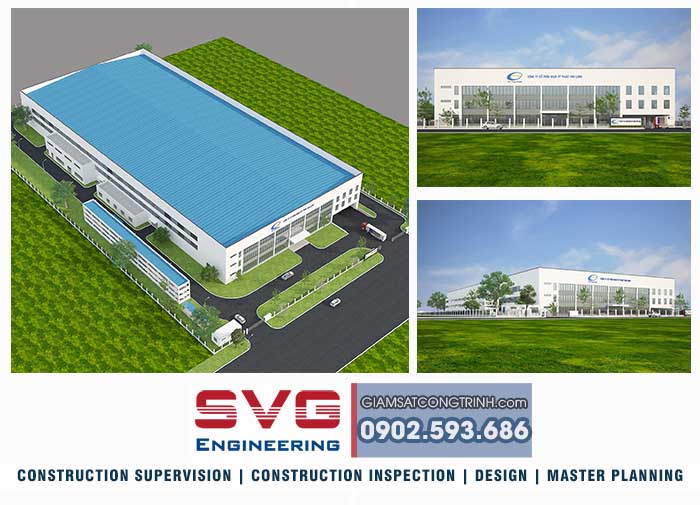
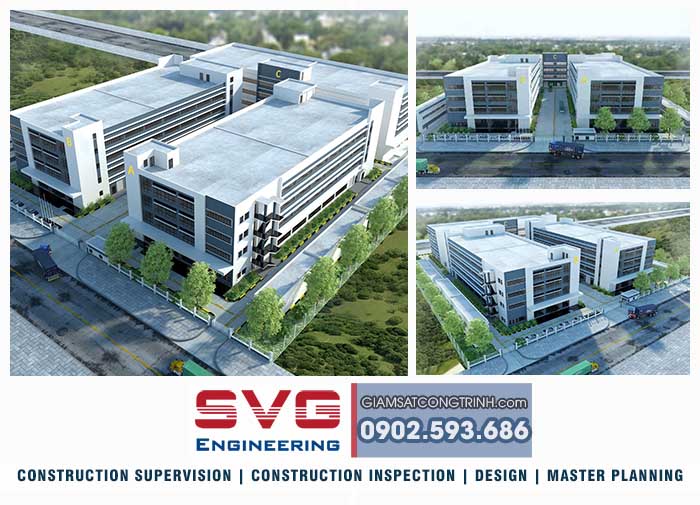
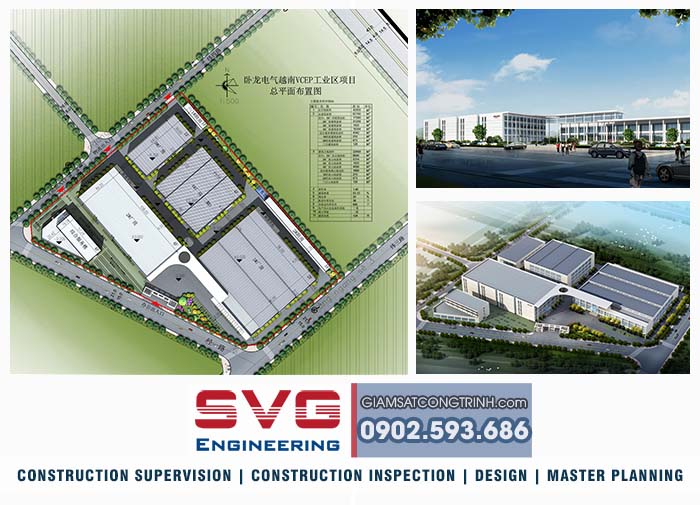
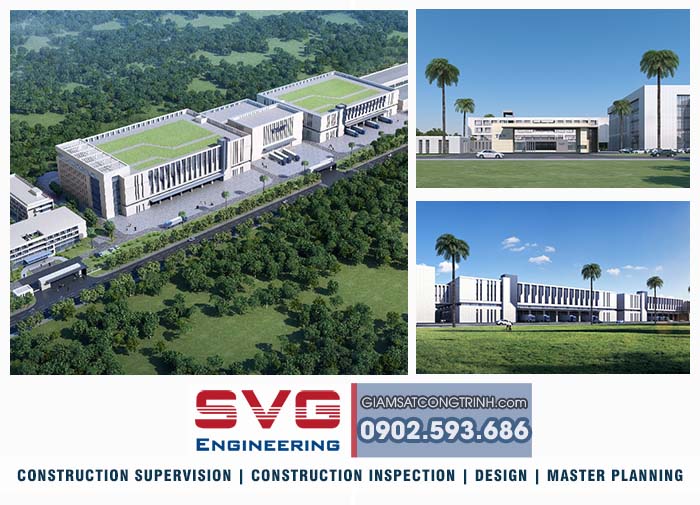
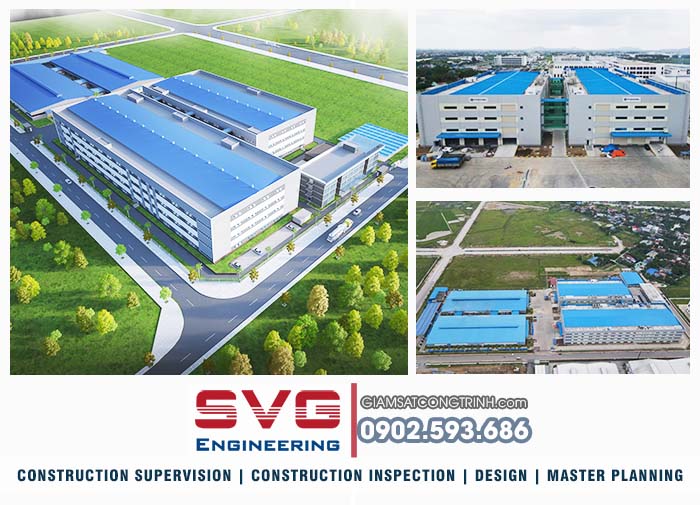
SOME OUTSTANDING INDUSTRIAL FACTORY DESIGNS BY SVG ENGINEERING
COST OF INDUSTRIAL FACTORY DESIGN IN VIETNAM
Please immediately contact Hotline: 0902.593.686 (Mr. Thang) & Email: svg.engineer@gmail.com for support and advice on issues related to Industrial Factory Design in Viet Nam ... Best regards!

VietNam construction consulting - Mr. Thang 0902.593.686
CONTACT US:
SAO VIET CONSTRUCTION DESIGN CONSULTING AND INSPECTION JOINT STOCK COMPANY
🏢 Hai Phong Office :
Address : 7th floor SVG Building - Bui Vien Street - An Bien Ward - Hai Phong City
☎ Tel: (0225) 3.747.819
📞 Hotline: 0902.593.686
📧 Email: svg.engineer@gmail.com
🌎 VietNam Website: giamsatcongtrinh.com
🌎 English Website: en.giamsatcongtrinh.com
🌎 China Website: cn.giamsatcongtrinh.com
 Youtube Channel: https://www.youtube.com/@svgengineering
🏢 Representative offices:
- Ha Noi Branch Office : No. 9/ 81 Hoang Cau Street, Dong Da Ward, Hanoi Capital
- Ho Chi Minh Branch Office: 2/1C Cao Thang Street, Ban Co Ward, Ho Chi Minh City
- Hue Branch Office : M25 Lot , 21 Street, Dong Nam Thuy An, Thanh Thuy Ward, Hue City