Foundation safety and landslide prevention are the 'keys' to the sustainability of every modern structure. This is the rationale behind the installation of Prestressed Concrete (PC) sheet piles. Not only are they exceptionally durable, but they also offer superior load-bearing capacity, meeting the most stringent technical and aesthetic requirements. The installation process demands extreme precision regarding positioning and verticality; therefore, the construction supervision engineer for PC sheet piling is the one responsible for quality, safety, and progress.
WHAT IS CONCRETE SHEET PILE INSTALLATION?
- Core Concept: Concrete sheet piles are structural components with rectangular, U-shaped, or W-shaped cross-sections, manufactured from reinforced concrete (typically prestressed concrete to enhance flexural strength). Unlike standard square piles used to transfer building loads to the ground, concrete sheet piles are designed to interlock, forming a continuous and watertight wall
- Objectives of Concrete Sheet Pile Installation:
-
Soil and Water Retention: Preventing soil erosion and landslides along riverbanks, coastlines, and canal systems.
-
Excavation Shoring: Protecting adjacent structures when excavating deep foundations in urban areas.
-
Infrastructure Revetment: Serving as retaining walls for transport infrastructure projects located alongside rivers or lakes.
CONSTRUCTION SUPERVISION OF CONCRETE SHEET PILES
The supervision of concrete sheet pile installation is divided into three primary phases:
1. Pre-Construction Supervision
-
Design Dossier Review: Gain a thorough understanding of the geological conditions, pile tip elevation, and design press forces ($P_{min}$, $P_{max}$).
-
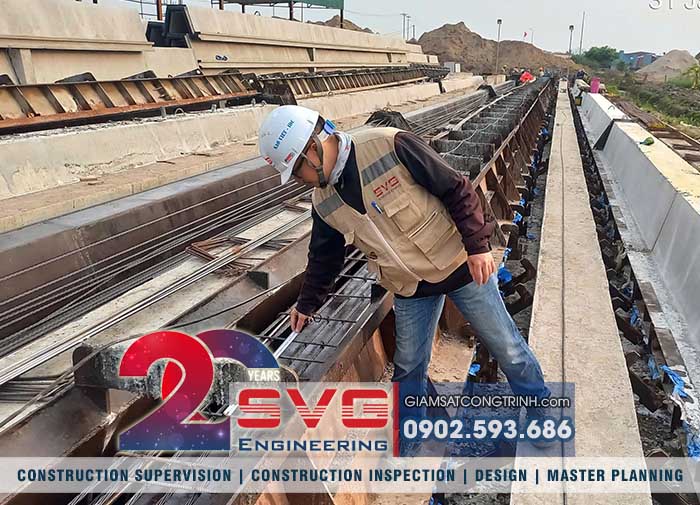
Material Inspection: Verify concrete grades, reinforcement diameters, and factory compression test results.
-
Equipment Certification: Ensure that pressing machines and vibratory hammers possess valid calibration and inspection certificates.
2. In-Progress Construction Supervision
This is the most critical phase, requiring 24/7 on-site presence:
-
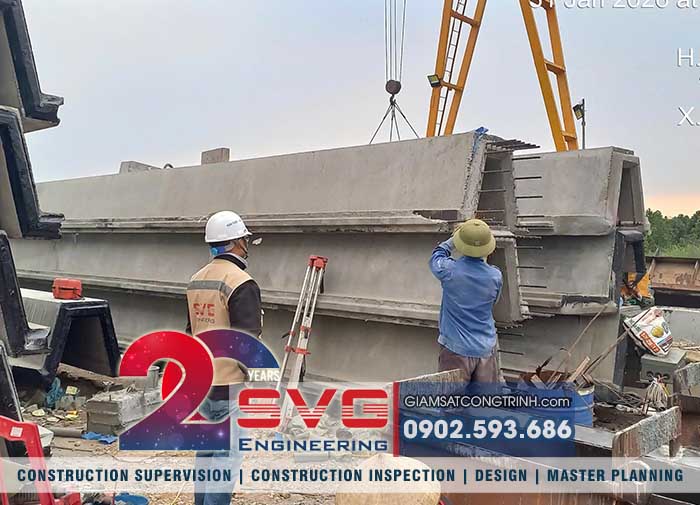
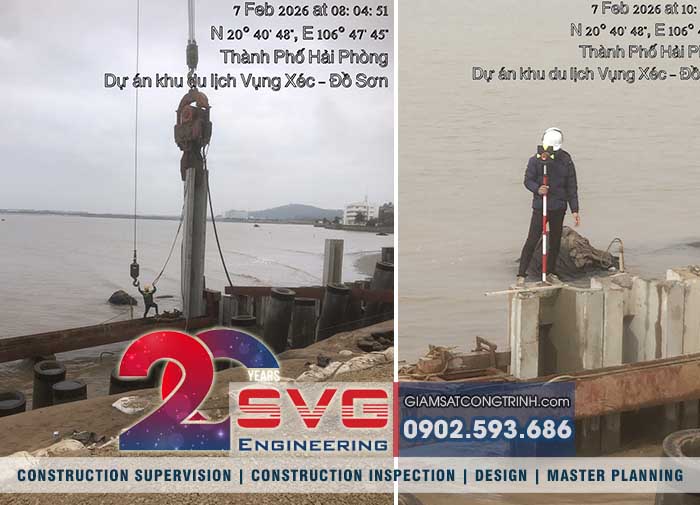
Verticality Control: Supervisors must use theodolites or plumb bobs to check the pile's inclination. The allowable tolerance is typically no more than 1%.
-
Monitoring Embedment Depth: Ensure the pile tip reaches the designated soil stratum as per the design. If geological anomalies are encountered (e.g., boulders or excessively hard clay layers), report immediately to the design consultant.
-
Site Diary Documentation: Record the duration of installation, pressing force at every meter of depth, or the hammer blow count (refusal).
3. Post-Construction Supervision (Acceptance)
-
Elevation Acceptance: Verify the pile head elevation after trimming or breaking.
-
Interlock Integrity Check: For watertight retaining walls, inspect the joints between sheet pile panels for gaps or water leakage.
-
Verification Testing: Perform Pit Testing (Low Strain Integrity Testing) or Static Load Testing (if required by design) to verify the structural integrity of the piles.
TECHNICAL PROCESS FOR CONCRETE SHEET PILE INSTALLATION
The installation of concrete sheet piles demands extreme precision in both positioning and verticality. The standard procedure consists of the following steps:
Step 1: Site Preparation and Setting Out
-
Underground Obstacle Clearance: Verify and clear underground utilities (water pipes, electric cables).
-
Surveying: Establish the positioning benchmarks and the centerlines for the sheet pile alignment.
-
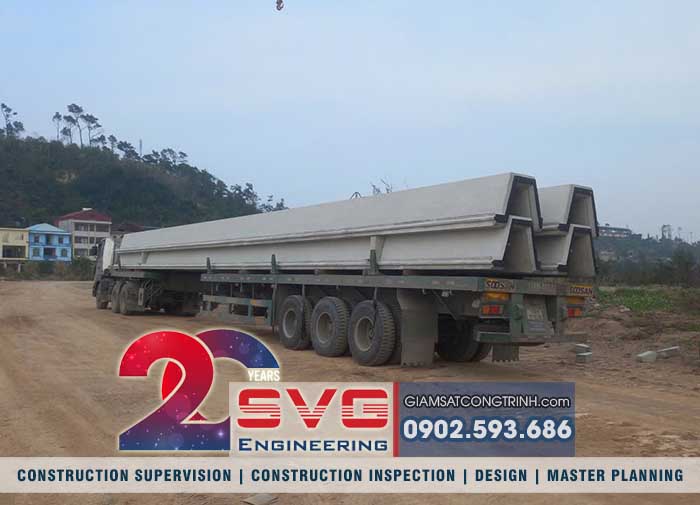
Pile Mobilization: Inspect factory certificates, geometric dimensions, and check for any cracks before moving piles into the driving or pressing position.
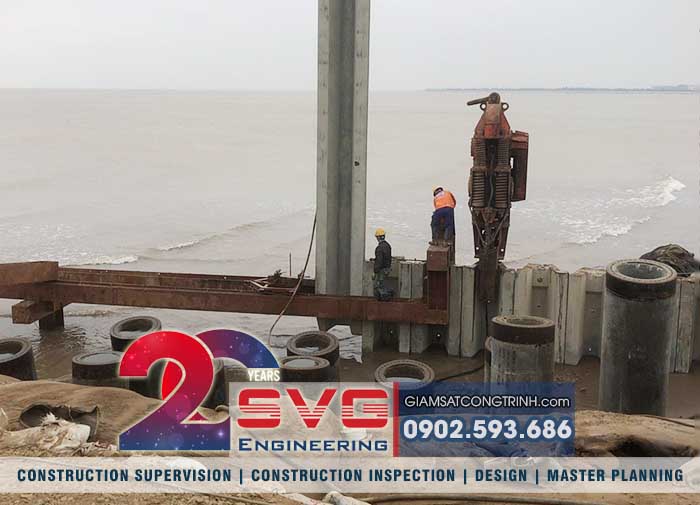
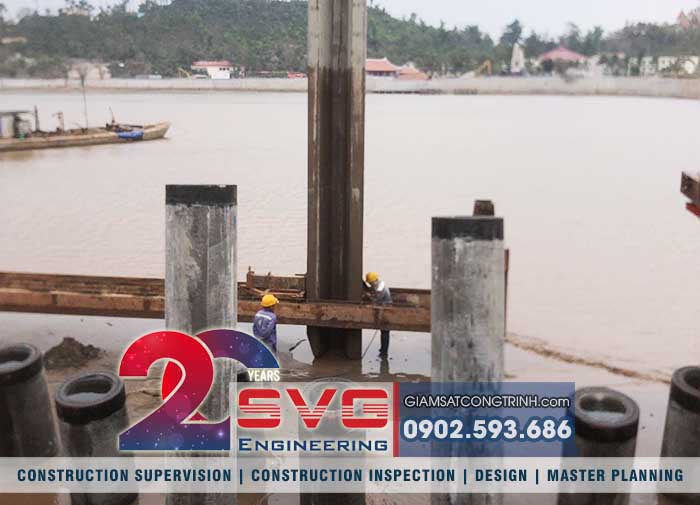
Step 2: Installation of the Guide Frame System This is a critical step to ensure the pile alignment does not "drift" or tilt. A steel guide frame system is used to keep the sheet piles perfectly aligned during the installation process.
Step 3: Sheet Pile Driving/Lowering There are currently three most common methods:
-
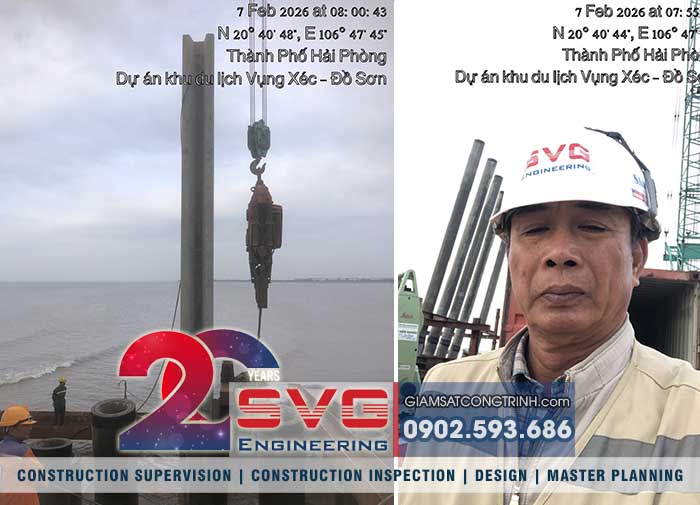
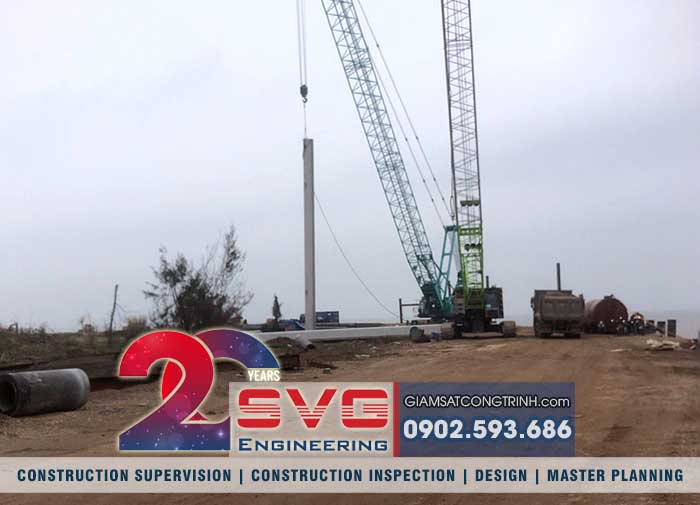
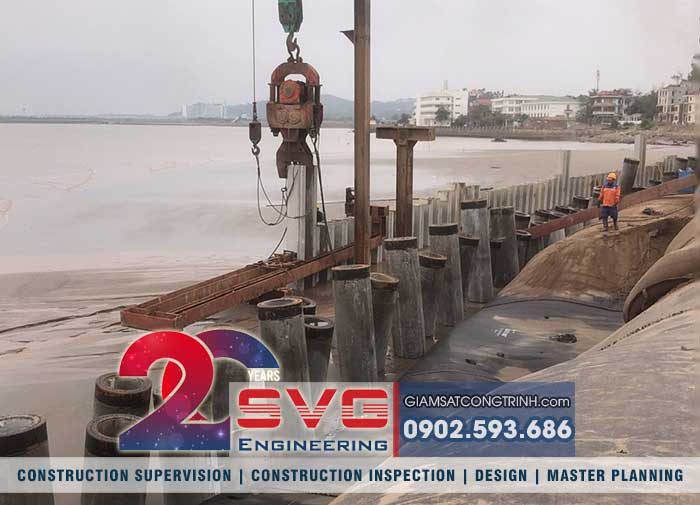
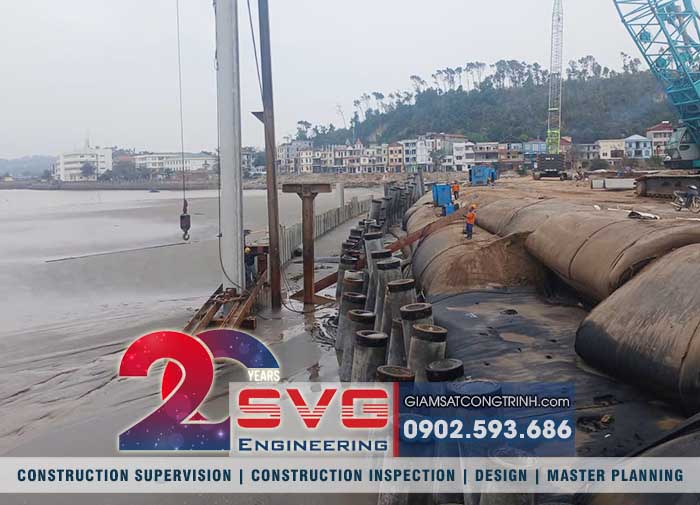
Vibratory Driving Method: Utilizing a vibratory hammer suspended from a crane. This is the most popular method due to its high speed and minimal heavy impact.
-
Water Jetting Method: Using high-pressure water jets to loosen the soil beneath the pile tip, facilitating easier penetration in stiff clay or compacted sand layers.
-
Hydraulic Static Pressing Method: Using a static pressing machine, typically employed in confined spaces or adjacent to existing civil structures to minimize noise and vibration.
Step 4: Installation of Waling and Anchorage Systems Once the piles reach the design elevation, the pile heads are connected using a capping beam or waling system (utilizing prestressed cables or reinforced concrete beams) to ensure the entire system functions as a monolithic unit.
APPLIED TECHNICAL STANDARDS (TCVN) IN VIETNAM
-
TCVN 9394:2012: Pile Driving and Pressing – Construction and Acceptance.
-
TCVN 9114:2012: Prestressed Reinforced Concrete Products – Technical Requirements and Test Methods.
-
TCVN 4453:1995: Monolithic Concrete and Reinforced Concrete Structures – Code of Practice for Construction and Acceptance.
SVG ENGINEERING: A PRESTIGIOUS CONSTRUCTION SUPERVISION UNIT
-
Sao Viet Design Consultancy and Construction Inspection Joint Stock Company (SVG Engineering) is a legally registered enterprise specialized in Construction Supervision Consultancy, under Business Registration Certificate No. 0200625288 issued by the Hai Phong Department of Planning and Investment.
-
SVG Engineering is officially recognized by the Construction Management Agency (Ministry of Construction) as a fully qualified entity for providing construction supervision consultancy services.
-
SVG Engineering’s team of civil engineers is professionally trained and holds Professional Practice Certificates for construction supervision, strictly complying with the specific classes and types of projects they oversee.

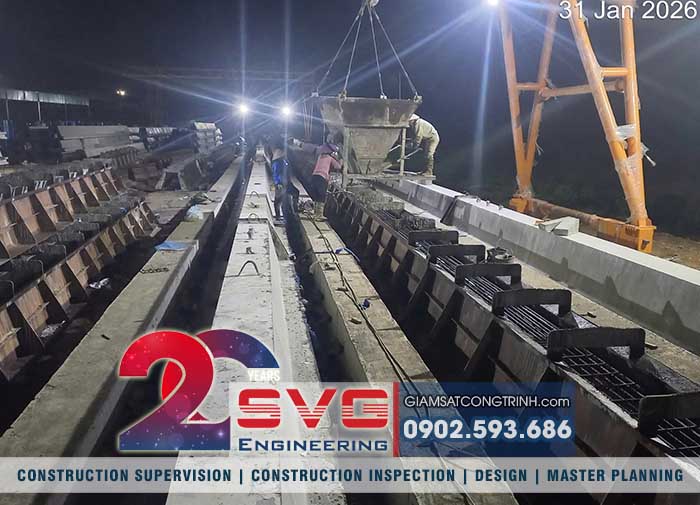
SVG ENGINEERING – ON-SITE SUPERVISION OF CONCRETE SHEET PILE INSTALLATION
COST OF CONSTRUCTION SUPERVISION CONSULTING IN VIETNAM
Please immediately contact Hotline: 0902.593.686 (Mr. Thang) & Email: svg.engineer@gmail.com for support and advice on issues related to Construction Supervision Consulting in Viet Nam ... Best regards!

VietNam construction consulting - Mr. Thang 0902.593.686
CONTACT US:
SAO VIET CONSTRUCTION DESIGN CONSULTING AND INSPECTION JOINT STOCK COMPANY
🏢 Hai Phong Office :
Address : 7th floor SVG Building - Bui Vien Street - An Bien Ward - Hai Phong City
☎ Tel: (0225) 3.747.819
📞 Hotline: 0902.593.686
📧 Email: svg.engineer@gmail.com
🌎 VietNam Website: giamsatcongtrinh.com
🌎 English Website: en.giamsatcongtrinh.com
🌎 China Website: cn.giamsatcongtrinh.com
 Youtube Channel: https://www.youtube.com/@svgengineering
🏢 Representative offices:
- Ha Noi Branch Office : No. 9/ 81 Hoang Cau Street, Dong Da Ward, Hanoi Capital
- Ho Chi Minh Branch Office: 2/1C Cao Thang Street, Ban Co Ward, Ho Chi Minh City
- Hue Branch Office : M25 Lot , 21 Street, Dong Nam Thuy An, Thanh Thuy Ward, Hue City